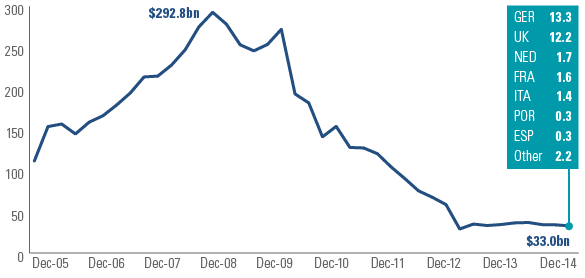
- We do not expect a repeat of the 2011-12 systemic threat to the Euro area, largely due to a shift in Greek counterparty exposure away from the private sector to the official sector – See Exhibit I for the drop in European banks’ claims against Greece compared to recent history. Our base case expectation is that Greece will remain part of the Eurozone.
- We believe global markets have taken the week’s developments in stride. While the S&P 500 Index on Monday suffered its biggest one-day drop since April 2014,[1] the decline of 2.1% was about half the largest daily losses seen during the 2011 European sovereign debt crisis.
- Although the outcomes of the July 5 referendum in Greece and Greece’s latest proposal to creditors are each uncertain, the European Central Bank (ECB)’s quantitative easing program has been supportive of European markets. We believe the ECB may ease further if markets become more volatile.
Greece may be dominating headlines at the moment and market volatility may continue, but we believe economic data may shed more light on long-term fundamentals than short-term market events. Just this week, for instance, readings of consumer confidence on Tuesday and US manufacturing on Wednesday exceeded expectations. Monthly jobs data on Thursday potentially may bring more welcome news.