

Menu Our services in the selected location:
  • No services available for your region.
Select Location:
Remember my selection
Your browser is out of date.
GSAM Connect 
|
June 30, 2015

GSAM Connect | June 30, 2015

On Being Diversified, Strategic, and Careful

EMAIL THIS

Note: Separate multiple email address with a comma or semicolon.

SEND
Send me a copy

EMAIL THIS

Note: Separate multiple email address with a comma or semicolon.

Your Name:

Your Email Address:

OPEN EMAIL TO SEND
Send me a copy

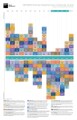
Of the lessons which can be drawn from the performance of major asset classes over the last decade and a half, here is one that we draw: It is very difficult, if not impossible, for most investors to predict the outperformance of a given asset class in a given year. Do US equities outperform in the long run? In the last few years they have. But, as the below chart shows, this trend turns out to be different from the longer-term history.

We believe that long-term allocation choices should be based on more than the recent past – and history tells us that investors who limit themselves this way may miss out on potentially attractive investment opportunities.

We believe the historical performance of major asset classes underscores the importance of three portfolio-construction principles:

  1. Being diversified
  2. Being strategic
  3. Being cautious

Being diversified

Investors often own what they know and/or what has performed well recently. So not surprisingly, there is a bias in the marketplace today in favor of US large-cap equities. But did you realize how many attractive return opportunities investors have missed historically by focusing heavily on US large-cap equities? From the beginning of 2000 through the end of 2014, US large-cap equities cracked the top five in terms of annual performance only twice – in 2013 and 2014. Meanwhile, US large-cap equities have been in the bottom five performers on six different occasions since 2000. Historically speaking, as the chart shows, a range of asset classes have delivered more attractive long-term returns than US large-cap equities.

Being strategic

Follow any particular asset class on the chart. You’ll see that the pattern of investment returns from year to year seems virtually random. On average, three or four of the 15 asset classes posted negative returns in any given year (3.53, to be exact). A little more than two, on average, posted negative returns over any given five-year period – and about one-third were negative in any ten-year period. However, expand the time horizon to the full 15 years and none of the asset classes posted negative returns for the period. As the data suggest, we believe that a long-term approach potentially can be another powerful consideration for investors, in light of the positive long-term investment returns.

Being cautious

When considering short-term views, have you thought about how far apart the returns of stocks, bonds and other assets can be from one year to another? Since 2000, the average performance gap between the highest- and lowest-performing asset classes is 53%. The gap has gotten as high as 80% and was no smaller than 30% over the period. Moreover, in more than half of the years depicted – 8 of 15 – at least one asset class posted a double-digit loss. We believe these numbers are a powerful argument for caution in sizing the degree of risk you take in short-term views. We believe investors should remember the mathematics of investment loss. A 20% drop in a $10,000 portfolio requires a 25% rise just to reach break-even (meaning to reach the value of the initial investment). The steeper the drop, the more difficult the recovery has been.


Stay posted on the latest market developments and key themes for your portfolios and practices.
Get Connected

Related Posts

June 30, 2015 | GSAM Connect
Interest Rates and Your Portfolio: Lessons from History

The subject of rising interest rates is back in the headlines. How should investors think about the potential impact of rising rates on their portfolios? History offers a few lessons on the subject.