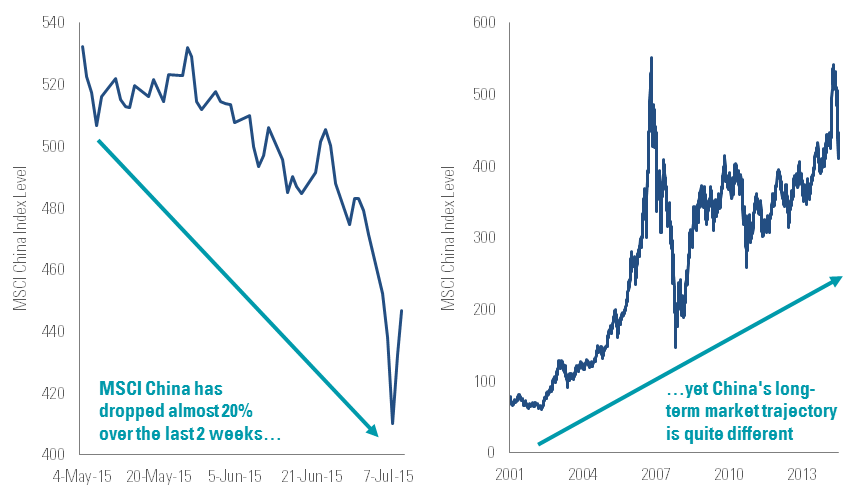




Chinese equities have suffered a significant correction since mid-June amid sharp daily gyrations. The government has taken a heavy-handed approach in an attempt to stem the fall. Given the unwinding of margin positions, which appears to have contributed to the selloff, we believe it is not all that surprising that we have seen a spike in market volatility.
While the Shanghai Composite1 is still down about 25%2 from its recent high, we believe investors should view the selloff in broader context.
- The correction follows a rally of more than 150% over the past 12 months. Chinese equities are still up over the past year, including the biggest single-day rally in six years on Thursday and additional gains Friday.
- We believe the correction significantly weakened investor confidence, which led to a rapid unwinding of margin positions as well as voluntary selling.
- Still, we believe it will take some time before investor confidence is restored—at one point, some 1,400 Chinese-listed stocks stopped trading, meaning more than half of the market was halted. We believe this development contributed to the market decline.
In June, regulators took steps to tighten controls on margin trades, triggering the initial shockwave in the A-share market (traditionally reserved for Chinese investors), which then bled into the H-share market (utilized by foreign investors to access to Chinese investments).
Amid these developments, we believe perspective is warranted. China’s long-term market trajectory is quite different from the recent selloff. Not only is China’s market still up over the past 12 months, but a long-term look shows Chinese equities have rallied sharply over the past 15 years.