

Menu Our services in the selected location:
  • No services available for your region.
Select Location:
Remember my selection
Your browser is out of date.
GSAM Connect 
|
January 13, 2016

GSAM Connect | January 13, 2016

The Long Cycle: Measuring the Economic Expansion

As the current six-year-old economic expansion rolls on, some investors may be focused on the age of the expansion. Here’s why we think that the current prolonged period of modest-but-positive global growth can continue.

In our view, several factors are supporting growth in developed economies. One is accommodative monetary policy. Both the Bank of Japan and European Central Bank remain in maximum accommodation mode, and interest rates in the US, though rising, remain low by historical standards. Moreover, as rates begin to rise in the US, we would point out that, historically, the start of a Federal Reserve tightening cycle has not ended the expansion phase of the US economic cycle, nor we do not expect that to happen this time around.1
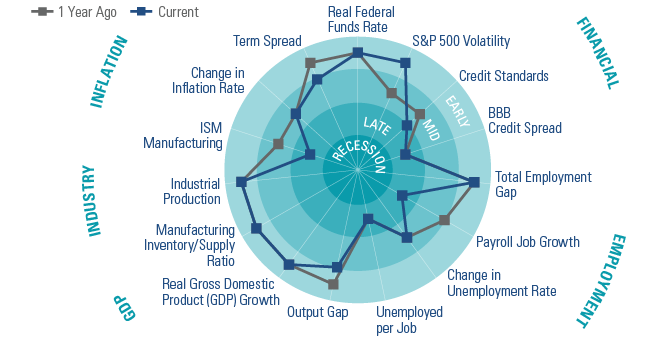
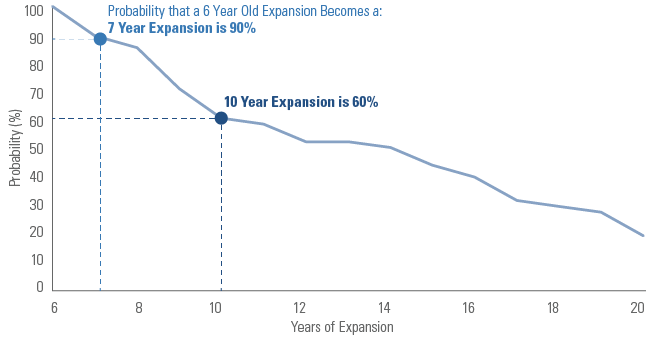
EXHIBIT 1: MEASURES OF THE US ECONOMIC EXPANSION

Source: Goldman Sachs Global Investment research and GSAM, as of October 30, 2015. The chart reveals the individual positions of 15 economic indicators across the four stages of the business cycle (early, mid, late, and recession).


Amid this accommodative backdrop, a range of economic indicators suggest that the expansion remains in a mid-cycle phase – especially improving labor markets and low energy prices.

We see the Eurozone economy and credit cycle, for instance, in the recovery phase and primed for an expansion. We view the Japanese economy and its ongoing corporate governance revolution similarly. In the US, the economy remains in a mid-expansion phase (Exhibit 1).

While the US corporate cycle appears somewhat advanced, we would note that each phase of the current cycle has been prolonged, with a slow recovery in credit after the 2008-09 financial crisis, and a gradual expansion of corporate leverage thereafter. We expect the next phase – a transition to rising defaults – to be extended as well. We also think that the positives in the world’s largest economies outweigh the challenges in some emerging economies, such as China.

Lastly, we would point out that age, in itself, may have little bearing on the prospects of a given economic expansion. Based on historical data (Exhibit 2), we estimate the probability of the current six-year old US economic expansion entering its seventh year at about 90%. Similarly, using historical data, we see a 60% probability that our current cycle may avoid recession for another four years – maturing into a 10-year cycle.

EXHIBIT 2: HISTORICAL PROBABILITY OF THE US ECONOMIC EXPANSION

Source: Goldman Sachs Global Investment Research and GSAM. As of November 9, 2015. The chart shows the cumulative probability that an expansion will last longer than six years (the duration of the current US expansion). Cumulative probability refers to the unconditional probability based on US business cycle data since 1950. Expansion refers to the period during a business cycle when the economy moves from a trough to a peak.


In short, global economic growth may be modest, but we believe it is sturdy. The largest economies should benefit from low energy prices and easy policy, helping to stabilize global growth and offset the slowdown of emerging economies such as China.

Stay posted on the latest market developments and key themes for your portfolios and practices.
Get Connected

Related Posts

January 04, 2016 | GSAM Connect
Adapting to a World of Modest Index Returns

Why we think investors may have to work harder for returns during 2016. 

November 19, 2015 | GSAM Connect
The Inflation Outlook: An Interview with Alex Stiles

Goldman Sachs Asset Management’s Alex Stiles provides views on the state of inflation globally.

November 11, 2015 | GSAM Connect
Do You Know Where Your Risk is?

In our view, many investors fail to understand where a portfolio’s risks and returns come from -- we believe the answer can be surprising.