


Menu Our services in the selected location:
  • No services available for your region.
Select Location:
Remember my selection
Your browser is out of date.
GSAM Connect 
|
July 20, 2015

GSAM Connect | July 20, 2015

Markets Historically Overstate the Path of Interest Rates

As investors anticipate the first Federal Reserve (Fed) interest rate increase in a decade, we believe a dose of longer-term perspective is warranted. 

In semiannual testimony before lawmakers earlier this week, Fed Chairwoman Janet Yellen reiterated her view that the federal funds rate is likely to rise this year. She also touted the benefit of the Fed acting sooner, and then proceeding slowly with additional rate increases. “If we wait longer, it certainly could mean that when we begin to raise rates we might have to do so more rapidly,” Yellen said on July 15 before a House panel.

In light of that statement, we took a look at how markets historically have projected future moves in short-term interest rates. And as Exhibit 1 shows, investors for nearly 30 years typically have overstated the path that interest rates have taken.
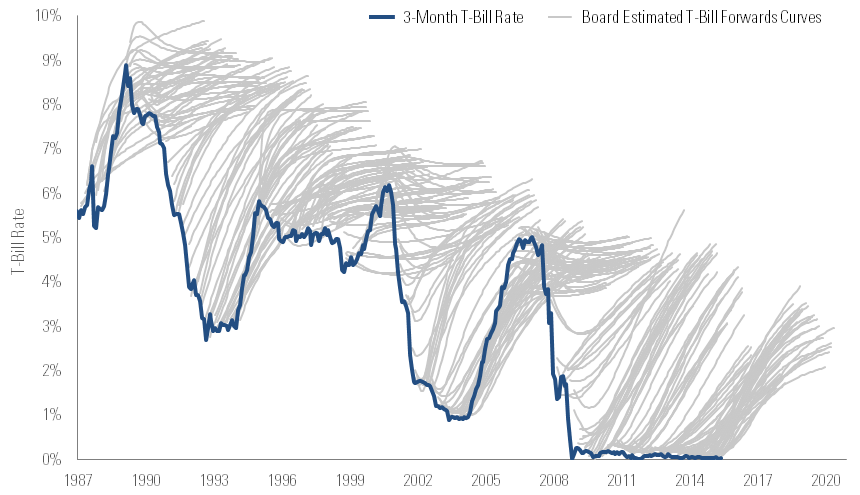

EXHIBIT 1: MARKETS HISTORICALLY OVERSTATE THE PATH OF INTEREST RATES

Chart of the Week 7-17-15

Source: Federal Reserve Board and Goldman Sachs Global Investment Research. Market and Economic Summary Source: Bloomberg and GSAM. T-bill refers to the US Treasury Bill, which is a short-term debt obligation backed by the US government with a maturity of less than one year. The chart depicts the 5 year T-bill forwards curves, which shows market expectations of the future yield on a T-bill. Past performance does not guarantee future results, which may vary. 

The chart highlights the 3-month Treasury Bill rate (the blue line) and how it compares to rate projections on the forward market (the gray lines). For instance, in 2008, the forward market projected short-term rates would rise over the next few years. Of course, rates remained near zero, illustrating how the market’s rates expectations were unfounded. And as the chart shows, the pattern of overstating rate expectations dates back far beyond the financial crisis. 

Indeed in many cases, the chart suggests that the Fed has moved later than markets expected, and more aggressively. When the Fed raised the federal funds rates in 1994, 1999, and 2004, the path of those tightening cycles was actually steeper than markets had predicted.

However, given the scale of the economic downturn in 2008, this time we believe that the Fed is particularly focused on a slower reversal. And if history is any guide, we believe this chart’s underlying takeaway suggests investors should temper their expectations for how high rates will go.

Stay posted on the latest market developments and key themes for your portfolios and practices.
Get Connected

Related Posts

July 13, 2015 | GSAM Connect
Greece, Eurozone Leaders Reach a Deal

Eurozone leaders and Greece hammered out an agreement Monday morning contingent on the Greeks implementing a fresh round of austerity measures. Here are the details and potential market implications from the deal.

July 10, 2015 | GSAM Connect
Putting China in Perspective

Chinese equities have suffered a significant correction since mid-June amid sharp daily gyrations. While the government has taken a heavy-handed approach in an attempt to stem the fall, we believe investors should view the selloff in broader context.

July 16, 2015 | GSAM Connect
Buying High and Selling Low: What the Equity Flows Show

You may have heard the warning that attempting to “time” the market can result in a poor investment experience. As historical fund flows suggest, hearing the “market timing” warning may not be the same as heeding it.