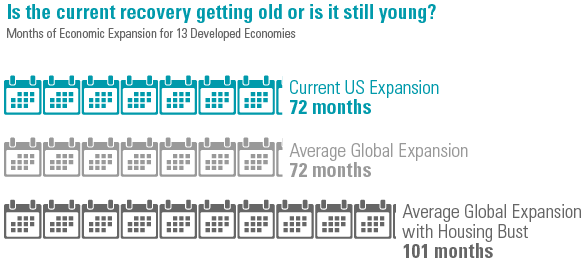
But this is no typical expansion. The present recovery, coming as it did after the global financial crisis of 2007-08, was preceded by a housing bust. We believe this is an important distinction. Isolating average expansions following housing busts shows that, on average, such expansions have been considerably longer-lived – at an average 101 months.
Historically, the deeper the bust, the longer the subsequent recovery has been.
US gross domestic product (GDP) shrank at a 0.2% annual rate in the first quarter of 2015, only the third time since the financial crisis that quarterly US economic output shrunk. Many economists expect growth picked up in the second quarter.
Economic expansions -- defined by the National Bureau of Economic Research (NBER) as periods when economic activity is increasing and GDP is positive – typically aren’t derailed by a single quarter. The last US recession – measured by NBER – occurred from December 2007 through June 2009 during the financial crisis. Since June 2009, the US economy has been expanding.
Historically, US recoveries of the current length aren’t unprecedented. Measured by NBER, the 1960s recovery—1961 through 1969—lasted 106 months, second only to the 1990s technology boom expansion, which spanned 120 months from 1991 to 2001.
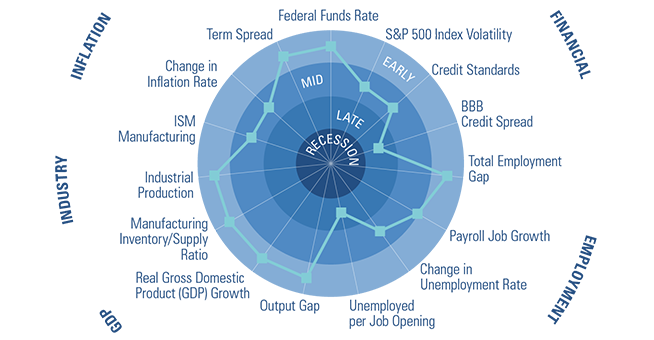
Time frames notwithstanding, we believe fundamental indicators—as seen in Exhibit Two below—suggest the US economy is about mid-cycle in the current recovery. From inflation and manufacturing to financial and employment gauges, signs suggest the economy remains positioned for further growth.
Absent an exogenous shock, we believe the current recovery still has more room to run. Age, alone, doesn’t appear to be a reason to worry about the state of the expansion.