Menu Our services in the selected location:
  • No services available for your region.
Select Location:
Remember my selection
Your browser is out of date.
GSAM Connect 
|
March 31, 2016

GSAM Connect | March 31, 2016

March 31, 2016 | GSAM Connect

Special FX: The Impact of Currency Hedging on Bond Portfolios

The pros and cons of currency hedging are a frequent topic in equity portfolios, but the subject arises less frequently for bonds. In our view, this is an important omission.

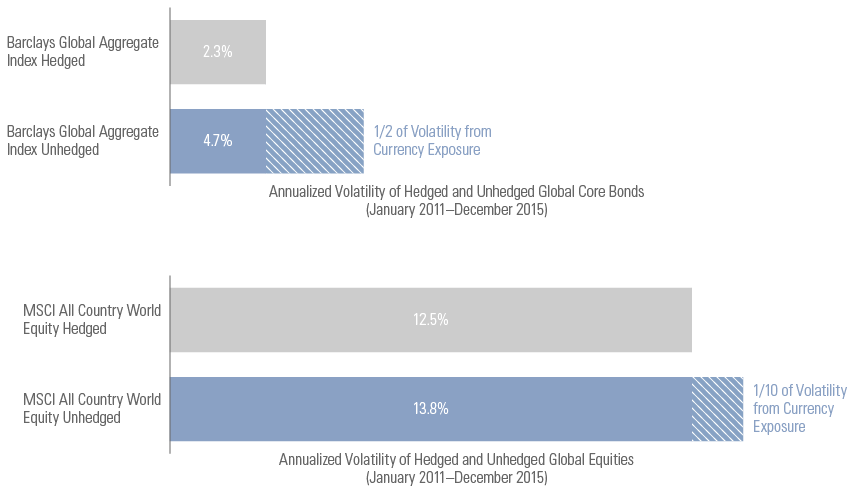
EXHIBIT 1: CURRENCIES SIGNIFICANTLY INCREASE RISKS OF GLOBAL BOND PORTFOLIOS

Currencies Significantly Increase Risks of Global Bond Portfolios

Source: Bloomberg, GSAM, covering the five-year period Dec. 31, 2010 through Dec. 31, 2015. Volatility is a statistical measure of the dispersion of returns for a given security or index. See end notes for index definitions and important disclosures. Past performance does not guarantee future results, which may vary.


We think of currencies’ impact on bond allocations as a “blunt-force instrument.” In contrast to the lighter impact on equities, currencies can drive a large portion of the month-to-month movement of a bond allocation. Exhibit 1 shows that over the period 2011-15, currency moves drove about half the volatility of the unhedged global bond index, versus only about one-tenth the volatility of an unhedged approach to global equities.

For many investors, core bonds play a risk-managing role in the overall portfolio in comparison to more volatile equity and low-quality fixed income. If currency exposures cause an increase in risk, the allocation may work against these investors’ intended goals. Unhedged global bond portfolios have often delivered less attractive risk-adjusted returns than a hedged equivalent. Over the five years ending Dec. 31, 2015, hedged global bonds returned 3.9%, while unhedged global bonds returned 0.9%.

As a result of this lower return plus higher volatility, unhedged global bonds’ risk adjusted returns (or “Sharpe ratio”) have lagged behind (the unhedged index’s Sharpe ratio is 0.19 over the period, versus 1.68 for the hedged index).

For these reasons, we believe a currency-hedged approach to global bond portfolios may be attractive to a range of investors. Currency-hedged global bonds can be (1) an effective way to seek additional sources of return, (2) a source of new income potential in today’s low-yield environment, and (3) an intelligent response to the often unattractive risk-reward profile of currency exposures in global bond portfolios.

Stay posted on the latest market developments and key themes for your portfolios and practices.
Get Connected

Related Posts

March 15, 2016 | GSAM Connect
Spotting Canaries and Phoenixes in Corporate Credit

Examining the major sources of risk and return in corporate credit in 2016.

January 08, 2016 | GSAM Connect
The Case for Blending Income Sources

Blending income sources has the potential to help blunt some of the unwanted tradeoffs which frequently arise for income-oriented investors.

February 18, 2016 | GSAM Connect
Where We See Value in High Yield Bonds

We believe select areas of the high-yield bond market can offer attractive compensation relative to today’s increased fundamental risk.