Menu Our services in the selected location:
  • No services available for your region.
Select Location:
Remember my selection
Your browser is out of date.
GSAM Connect 
|
February 18, 2016

GSAM Connect | February 18, 2016

Where We See Value in High Yield Bonds

Despite what we would describe as “late-cycle” characteristics in the high yield bond market, we see value in some areas of high yield in 2016. When weighing valuations against a climate of elevated fundamental risk, our answers to high yield’s current challenges include purposeful security selection and a tactical investment mindset.

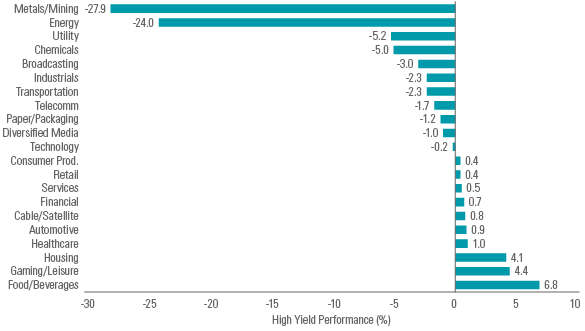
EXHIBIT 1: DISPERSION IN 2015 US HIGH YIELD SECTOR RETURNS

Commodities-related sectors experienced outsized underperformance during 2015. 

Sector Performance Commodities

Source: Bank of America Merrill Lynch, reflecting sub-sectors of the BAML High Yield Master II Index, as of Dec. 31, 2015. Dispersion is a statistical term describing the size of the range of values for a given variable. Past performance does not guarantee future results, which may vary.


High yield is coming off a year of elevated dispersion of returns (Exhibit 1), as commodity-related subsectors generally followed the price of oil lower. The year 2015 also saw US high yield’s worst-ever annual performance outside of a recession1. We believe the energy-related stress in high yield should continue. Current spreads and yields imply the US is in or is entering recession, however, and we do not think a recession is probable – hence, we view the high-yield selloff as a source of opportunity.

Our response to the state of the high yield market today is to emphasize investment themes which may benefit from a continued dispersion of returns. As one illustration, we see a rationale for moving up in credit quality. We also believe a focus on sectors which benefit from continued US economic growth and lower oil prices, such as consumer and real estate-related sectors, cellular telecommunications and cable, are another potential answer.

We also believe European high yield may benefit from loose European Central Bank policy and the region’s economic recovery. We see bank loans as less vulnerable to oil than certain other sectors, potentially better positioned for rising rates given their floating rate nature and a higher overall quality profile than high yield.

Areas where we are more cautious include sectors more sensitive to global macro uncertainties, such as energy, technology, chemicals, and metals and mining.

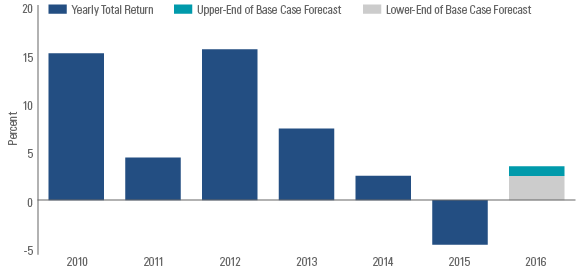
EXHIBIT 2: GSAM’S US HIGH YIELD TOTAL RETURN FORECAST

We expect 2016 total returns of roughly 2.5%-3.5% as a result of increased defaults and higher spreads. 

High Yield Total Return

Source: GSAM, as of January 2016, based on the BAML High Yield Master II Index. The economic and market forecasts presented herein are for informational purposes as of the date of this presentation. There can be no assurance that the forecasts will be achieved. Please see additional disclosures at the end of this presentation. Past performance does not guarantee future results, which may vary.


Our base case expectation is for commodities prices to remain lower for longer as global oversupply continues to weigh on markets. The continued surplus in oil has allowed inventories to build to record highs, and the risk of storage congestion has increased materially for 2016. In industrial metals, the supply/demand imbalance is more directly related to slowing growth in China, which accounts for 40%-50% of global demand for base metals. We do not expect supply in base metals to correct quickly, since market prices for industrial metals are still above cost of production in many cases.

We are estimating a total return of 2.5%-3.5% for US high yield in 2016 (Exhibit 2), an estimate which assumes a doubling of the default rate, driven disproportionately by commodity-related sectors2.

We see upside risk to our target total return if key commodity prices can stabilize and recover modestly by mid-2016, allowing the energy and metals and mining sectors to react in a similar fashion.

We see downside risk in a scenario of continued commodity declines, rising volatility driven by monetary policy, prospects for elevated net new supply in the form of possible “fallen angels” (bonds which were once rated investment grade but are now part of the high yield market), and the seasoning of the credit cycle as the market absorbs the reality of an accelerating default rate.

We are seeing increased signals that the high-yield sector is progressing into the late stage of the credit cycle. Corporate fundamentals have been slowly deteriorating, with higher merger and acquisition levels contributing to increasing leverage. We expect that margins may begin to retreat from their cycle peaks and revenue growth will slow; several sectors are already seeing revenue and earnings declines year-over-year. Refinancing has slowed. Though the market’s maturity profile is quite benign, the cost of debt is rising for high yield issuers, which will gradually stress their ability to service their debt. These factors underpin our view that the default rate, which has remained below average for six years, is likely to accelerate to 5.5-6% in 2016.

Acknowledging the deterioration in fundamentals that is occurring, we nevertheless see value in some areas of the market. Valuations have been driven to what we consider to be extreme levels. We believe select credits can offer attractive compensation even relative to the increased risk in today’s market. While it is not our central case that the US is experiencing or will experience a recession in 2016, we do note challenges have increased within the high yield market. We believe present conditions merit a cautious approach, wherein tactical positioning and security selection will be key.
Stay posted on the latest market developments and key themes for your portfolios and practices.
Get Connected

Related Posts

January 08, 2016 | GSAM Connect
The Case for Blending Income Sources

Blending income sources has the potential to help blunt some of the unwanted tradeoffs which frequently arise for income-oriented investors.

January 13, 2016 | GSAM Connect
The Long Cycle: Measuring the Economic Expansion

How much longer can the current prolonged period of modest-but-positive global growth last? Here are the reasons we think the economic expansion can continue.

February 03, 2016 | GSAM Connect
Putting the Market Selloff into Perspective

Though the headlines may focus on falling oil prices or turbulence in China, here is what we emphasize for investors as they make decisions about positioning their portfolios going forward.